
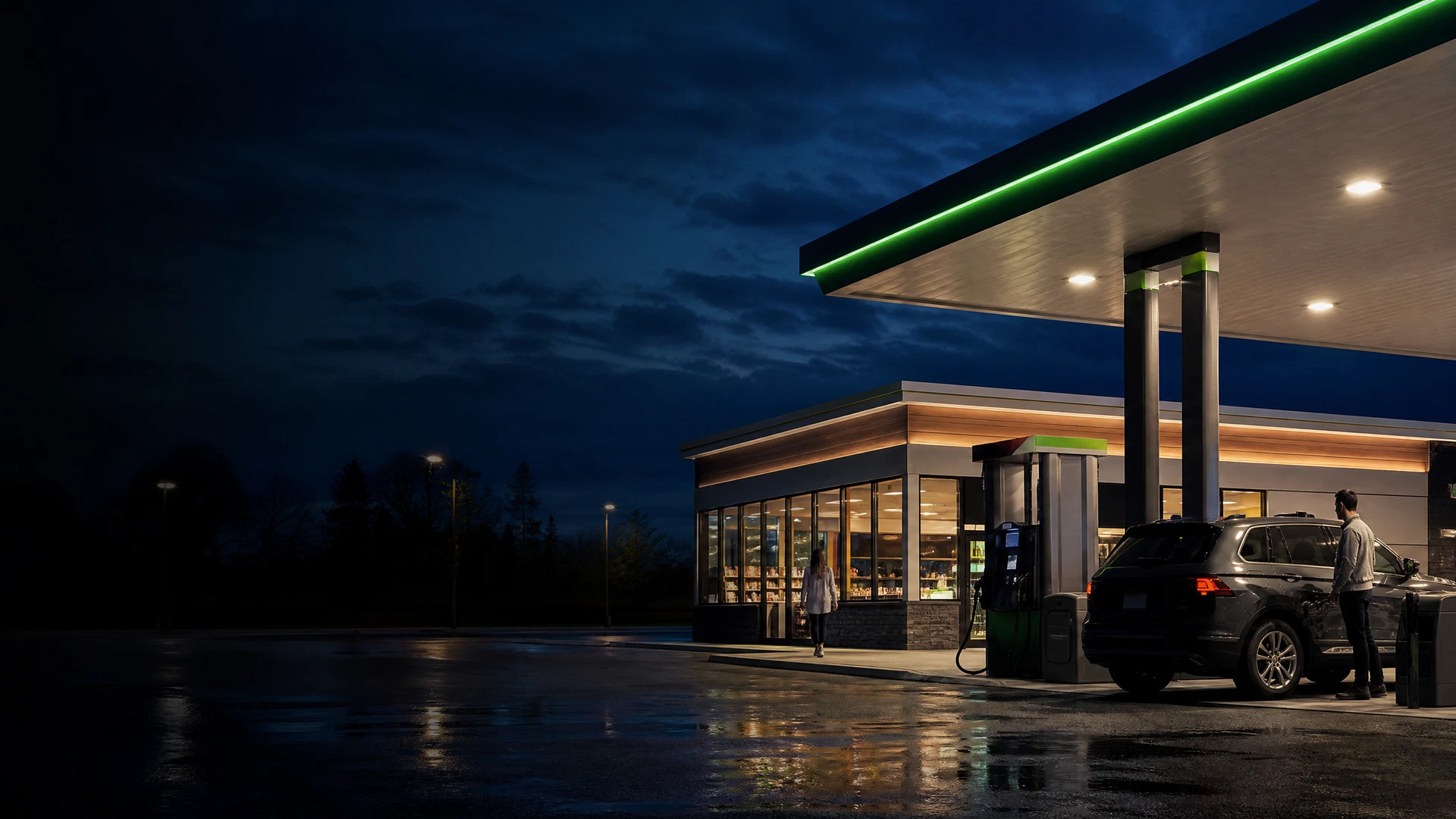
The U.S. convenience store industry serves approximately 165 million customers per day, according to NACS (National Association of Convenience Stores). With over 150,000 c-store locations nationwide, the competitive density is extraordinary — the average American lives within a half-mile of a convenience store. In this environment, the difference between a profitable location and a struggling one often comes down to a single question: can you get the driver who just passed your competitor's pumps to choose yours instead?
Geofencing advertising answers that question directly. By targeting devices at competing gas station locations and serving ads that highlight your fuel price, loyalty program, or in-store promotions, gas stations can redirect purchase decisions at the exact moment they are being made.
Why Inside Sales Matter More Than Fuel Margin
The economics of gas station advertising are counterintuitive. Fuel margin at most stations runs $0.03–$0.07 per gallon — a 15-gallon fill-up generates less than $1.00 in gross profit. Inside sales, by contrast, generate $0.35–$0.50 per transaction in margin on items like coffee, fountain drinks, snacks, and prepared food. A customer who comes inside spends an average of $6.50 per visit (NACS 2024 State of the Industry Report), generating more profit from a single inside visit than from 6–8 fuel transactions.
This economics reality shapes the optimal geofencing strategy for gas stations: use fuel price and convenience messaging to drive the initial visit, then use in-store promotions and loyalty program enrollment to convert fuel customers into high-frequency inside shoppers.
Competitor Conquesting at the Pump
The most effective gas station geofencing strategy targets the 200–500 foot radius around competing pump locations. When a driver pulls into a competitor's station, they are making a split-second decision based on price visibility, habit, and convenience. A mobile ad served at that moment — showing your current fuel price, a loyalty bonus offer, or a limited-time in-store promotion — can redirect that decision.
For branded fuel stations competing against unbranded independents, the creative emphasis should be on quality and loyalty rewards. For price-competitive independents competing against branded chains, the emphasis should be on transparent pricing and no-surprise fees. The key is matching the creative message to the specific competitive dynamic at each targeted location.
| C-Store Geofencing Strategy | Target | Primary KPI | Typical Lift |
|---|---|---|---|
| Competitor pump conquesting | Competing stations within 1 mile | Fuel visit share | 15–25% |
| Loyalty app enrollment | Competitor customers + trade area | App downloads | 20–35% |
| Morning commuter targeting | Residential areas, 6–9 AM | Coffee/breakfast transactions | 18–28% |
| Highway corridor targeting | Highway on/off ramps within 2 miles | Fuel + travel snack sales | 12–20% |
For a free geofencing proposal for your gas station or c-store chain, Mediavision2020 provides custom competitive zone mapping and projected lift estimates based on your specific market.


