17.19M
U.S. total vehicle sales SAAR in August 2026
A national market measure that helps frame the scale and seasonality of vehicle-shopping activity; it is not a local demand forecast.
Source: U.S. Bureau of Economic Analysis data via FRED
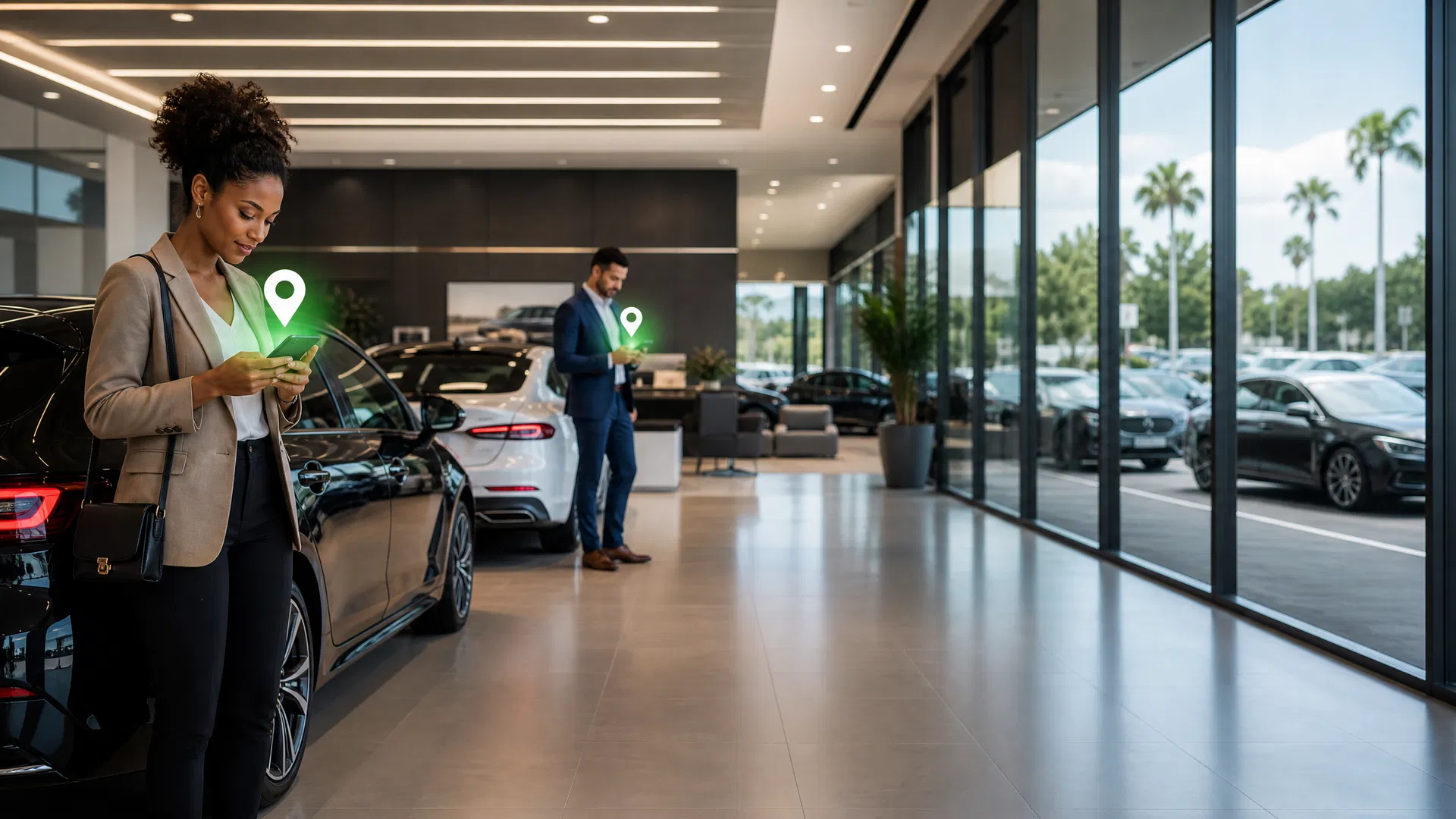
Automotive advertising
Build a more relevant buyer journey around competitor lots, auto malls, service settings, and address-based audiences—then carry the conversation through a focused offer and clear next step.
Dealer campaign planning
Automotive purchases involve comparison, timing, and several possible decision moments. A dealership location-based campaign should begin with the buyer journey it wants to support—not a broad market boundary or a generic inventory message.
By separating cross-shopping, service, trade-in, and address-based contexts, a dealer can give each audience a more fitting reason to engage. The campaign is strongest when its location choice, creative, landing page, and follow-up process tell one consistent story.
Automotive market intelligence
Sales context, shopping behavior, and media trends can help shape the questions a dealership asks before launch. They are national or industry-level context—not local forecasts, audience targeting rules, or campaign performance promises.
17.19M
A national market measure that helps frame the scale and seasonality of vehicle-shopping activity; it is not a local demand forecast.
Source: U.S. Bureau of Economic Analysis data via FRED66%
Cross-shopping reinforces the value of clear inventory, vehicle-category, and trade-in paths rather than assuming one fixed buyer journey.
Source: 2025 Cox Automotive Car Buyer Journey Study53%
The same study reported 40% used a mix of online and in-person steps, supporting a practical connection between digital research and the dealership experience.
Source: 2025 Cox Automotive Car Buyer Journey Study62%
Affordability can shape the questions shoppers bring to payment, trade-in, service, and ownership conversations; it should not be used to infer an individual’s circumstances.
Source: 2025 Cox Automotive Car Buyer Journey Study64%
A media-environment signal from Innovid’s own ad-server data, useful for considering video alongside other campaign channels—not a U.S. market-share or outcome benchmark.
Source: Innovid 2024 Advertising Insights Report for AutoSource notes: FRED’s August 2026 Total Vehicle Sales observation is a monthly, seasonally adjusted annual rate from the U.S. Bureau of Economic Analysis. Cox Automotive’s 2025 buyer study surveyed 2,344 recent U.S. buyers/lessees who used the internet while shopping; its results are weighted to the buyer population. Innovid’s figure reflects its own 2023 automotive video-ad impression data.
A practical framework
Four decisions keep the campaign aligned before creative and delivery begin.
01
Start with the conversation the dealership needs to create: a showroom visit, a test-drive request, a trade-in discussion, a service appointment, or awareness for a specific inventory category.
02
Map the competitor lots, auto malls, service centers, event venues, or address-based audiences that relate directly to the intended buyer journey.
03
Use a focused offer and landing page for the audience context. A service-drive message should not read like a new-model launch, and a trade-in offer should make its next step clear.
04
Agree on the reporting view before launch so the dealership can evaluate delivery, engagement, qualified actions, and attribution indicators in the context of its campaign goal.
Dealer-specific strategies
Each audience context needs a reason to be included and a message that reflects the dealership objective.
Build a focused audience around dealerships or auto malls where shoppers are comparing vehicles, then present an offer that gives them a reason to continue the conversation with your store.
Use relevant service, maintenance, or independent-repair contexts for a campaign centered on a service special, a trade-in conversation, or an upgrade path.
Organize creative around the vehicle category and buyer need you want to address—such as trucks, family vehicles, certified pre-owned inventory, or an EV conversation—rather than relying on one generic dealer message.
When an address-based audience is appropriate, align the audience criteria, campaign message, landing page, and consent-aware data practices before the campaign begins.
Buyer journey planning
Automotive shoppers can move between research, test drives, service, and replacement decisions. Separate campaign paths help the creative, landing page, and dealership follow-up stay relevant to the moment.
Use competitor-lot, auto-mall, and vehicle-category contexts when the dealership wants to introduce a relevant inventory, financing, or test-drive conversation to shoppers who are comparing options.
Give shoppers a simple next step while the decision is active: confirm availability, explore a vehicle category, compare a trade-in, or start a conversation with the dealership team.
Align service-drive, maintenance, and ownership messages to the practical reason someone would engage, such as scheduling service, learning about an offer, or considering an upgrade path.
Keep trade-in and replacement-vehicle messages distinct from service creative so the destination can explain the offer, the vehicle category, and the appropriate dealership contact path.
Creative that continues the conversation
A campaign should connect the reason a shopper is in a location with a specific offer and a destination that makes the next action understandable. That is how the ad experience remains useful rather than generic.
Lead with a specific model family, purchase reason, or dealership experience, then make the inventory or test-drive next step easy to understand.
Center the message on the practical decision—trade-in value, vehicle-selection help, or a clear conversation with the dealership—and keep the destination focused.
Connect a relevant service, maintenance, or ownership message to an appointment, offer detail, or upgrade discussion that fits the customer context.
Campaign handoff
A location-based campaign is more useful when the dealership has agreed on the offer, destination, response owner, and reporting conversation before launch. That gives shoppers a consistent experience and gives the team a practical way to evaluate the campaign.
Related solutions and guides
Explore the location-based approach behind competitor-lot and auto-mall campaign planning.
Explore resourceReview how an address-based audience can fit a defined dealership campaign and relevant offer.
Explore resourceUse the pricing overview to prepare a campaign conversation around scope and planning needs.
Explore resourceSee the reporting resource used to frame campaign delivery, engagement, and attribution conversations.
Explore resourceExplore a related automotive guide for RV dealership campaign planning.
Explore resourceExplore a related automotive guide for boat, motorcycle, and powersports dealership planning.
Explore resourceMeasurement
The campaign should be measured against the dealership’s stated objective. Reporting can bring together delivery and engagement signals with qualified actions and, where appropriate and available, location-visit attribution.
Start with the buyer audience, the location contexts that matter, and the action your dealership wants to create. We can help turn that plan into a focused geofencing campaign.
Request a Dealer Strategy SessionResources
Expert guides and industry insights to help you plan your campaign.
6 resources available
Industry Use Cases

Industry Use Cases

Industry Use Cases
Industry Use Cases
Industry Use Cases

Industry Use Cases
FAQ
Answers to common planning questions for automotive location-based campaigns.