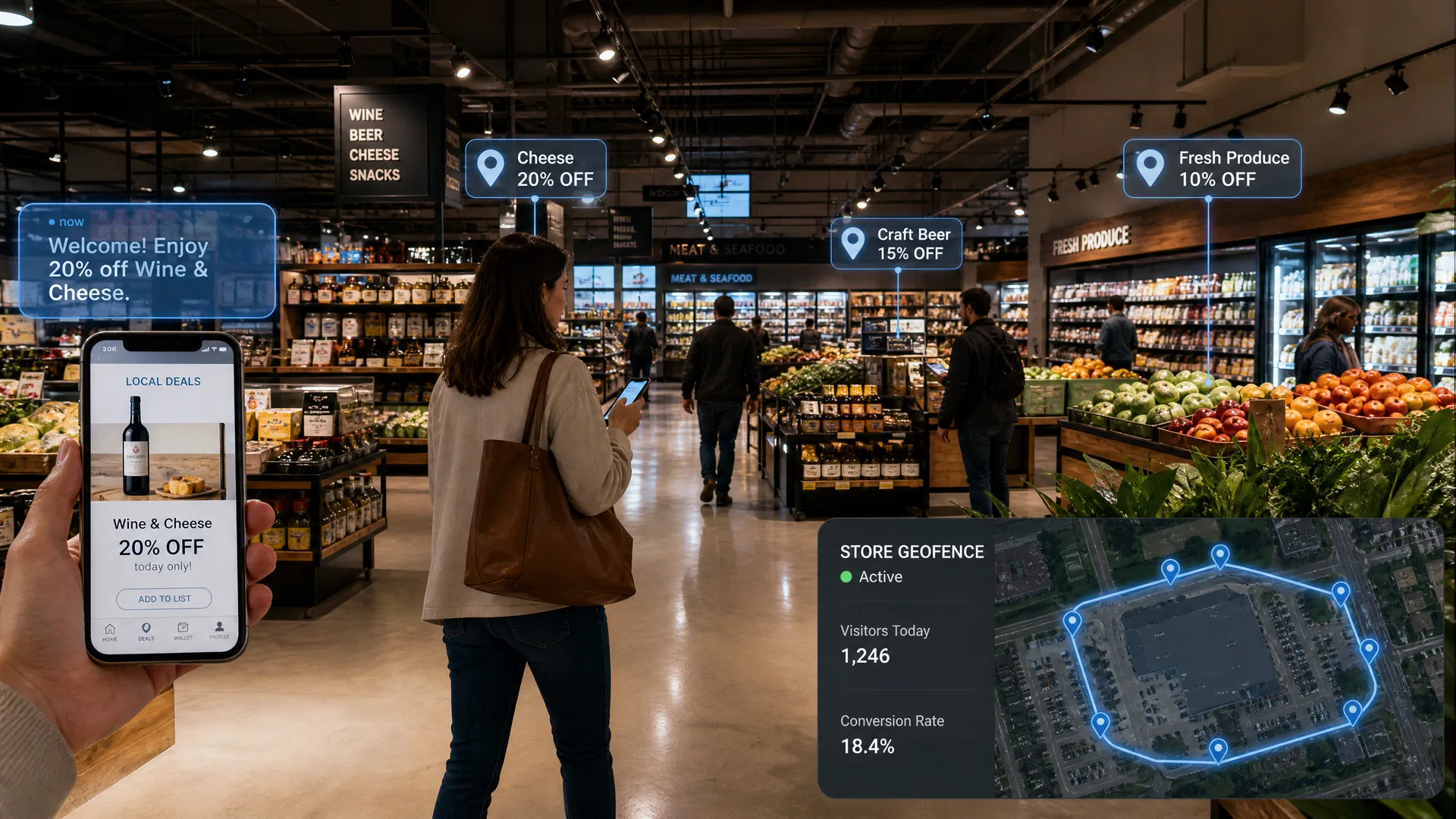

Retail competitor geofencing has fundamentally transformed how brick-and-mortar storefronts compete for local consumers, enabling brands to engage shoppers right as they evaluate products inside rival retail locations. Through advanced geofencing technology, marketers can establish precise virtual boundaries around competitor stores and parking areas to capture high-intent consumers at the exact moment of consideration.
In today's highly competitive omnichannel marketplace, physical retailers face relentless pressure from e-commerce giants and neighboring big-box chains. Traditional advertising methods—such as blanket billboards, untargeted mailers, and broad radio spots—frequently result in massive wasted ad spend because they reach passive audiences without regard to immediate buyer intent. By contrast, location-based intelligence allows retail marketing directors to identify consumers actively walking through competing aisles, shopping centers, or commercial districts and deliver timely promotional messages that drive immediate store visits.
The Evolution of Proximity Marketing in Modern Retail
The retail landscape has evolved far beyond simple proximity alerts and broad radius targeting. Modern geofencing leverages sophisticated mobile software development kits (SDKs) and multi-layered location signals—including GPS coordinates, Wi-Fi signal triangulation, and Bluetooth beacon networks—to map physical spaces with extreme accuracy. When retail brands deploy competitor geofencing, they are not merely guessing where shoppers might go; they are observing real-world consumer behavior patterns and intercepting foot traffic when brand loyalty is most vulnerable.
Consider a shopper browsing appliances, apparel, or specialty goods at a competing establishment. By drawing custom polygonal boundaries around that rival store, a retail brand can serve compelling mobile banner ads or rich-media video offers directly to the consumer's smartphone. When that ad highlights superior warranties, exclusive product availability, or an immediate 20% discount at a nearby competing location, the friction of switching allegiance drops significantly.
Furthermore, integrating location data with first-party customer CRM profiles allows enterprise retailers to personalize offers based on past purchasing history. If a customer frequently purchases outdoor equipment, geofencing a competing outdoor retailer triggers tailored promotional creative specific to that consumer's interests, dramatically boosting engagement rates and conversion velocity.
Core Strategies for Maximizing Retail Foot Traffic
Executing a high-performing retail geofencing campaign requires a structured multi-phase playbook. Retailers must balance geo-conquesting with customer retention and precise measurement. Below are the core pillars that define successful retail proximity campaigns:
1. Precise Polygon Geofencing vs. Radius Targeting
Traditional radius targeting (e.g., drawing a three-mile circle around a store) often captures unwanted residential areas, highways, and non-shopping zones. Advanced retail campaigns utilize custom polygon geofences that trace the exact architectural footprints of competitor buildings and parking lots. This eliminates wasted impressions and ensures that advertising budget is spent exclusively on individuals physically present within active commercial zones.
2. Real-Time Ad Delivery and Dynamic Creative Optimization
Timing is everything in retail marketing. Serving an ad hours after a consumer leaves a competitor's parking lot drastically reduces conversion potential. Programmatic ad exchanges enable real-time bidding and delivery while the shopper is still inside the geofenced perimeter. Dynamic creative optimization (DCO) allows brands to adjust ad copy based on weather conditions, inventory levels, or specific product categories currently trending in nearby stores.
3. Offline Conversion Tracking and Attribution
Proving offline return on investment has historically been the primary challenge for brick-and-mortar advertisers. Modern retail campaigns integrate foot-traffic attribution models to connect digital ad exposure directly to physical store visits. By comparing visitation rates of exposed users against an unexposed control group, brands can calculate true incremental lift and measure cost-per-visit with absolute mathematical certainty.
Real-World Retail Application and Case Study Insights
To understand the practical impact of location-based marketing, examine how regional apparel and specialty retail chains utilize geofenced conquesting. In a recent multi-location campaign across three major metropolitan markets, a specialty home goods retailer deployed geofences around twenty primary competitor locations. Over a 90-day period, the brand served contextual video ads highlighting exclusive financing and price-matching guarantees.
The results demonstrated a 34% increase in incremental store visits among exposed mobile users compared to the control group. Furthermore, foot traffic attribution analysis revealed that over 42% of visiting consumers made a purchase exceeding $150 during their initial store walk-in, proving that capturing active shoppers from competitors delivers immediate, high-margin revenue.
In addition to conquesting, retailers frequently deploy location campaigns around their own facilities to drive repeat purchases and re-engage lapsed customers. By analyzing dwell times and recurring visit frequencies, marketing teams can segment high-value patrons and reward them with VIP loyalty perks the moment they step back onto the property.
Overcoming Privacy and Compliance Challenges
As consumer data privacy regulations tighten globally, retail marketers must prioritize ethical data practices. Premium geofencing platforms rely entirely on aggregated, anonymized location data gathered from opt-in mobile applications with explicit user consent. No personal identifiers, home addresses, or sensitive private data are ever exposed or stored. Maintaining rigorous compliance protects brand reputation while delivering powerful, results-driven location intelligence.
Related Industry Pages
Getting Started with Retail Proximity Campaigns
Implementing a comprehensive retail geofencing strategy requires specialized expertise in polygon design, privacy compliance, mobile programmatic bidding, and attribution analytics. Ready to elevate your store traffic and capture market share from your biggest competitors? Request a free retail geofencing strategy session today to speak with our senior digital marketing consultants.