
For decades, many local and regional businesses invested their entire marketing budgets in traditional broadcast channels such as television, radio, and billboards. While these legacy mediums build broad brand awareness, they notoriously lack precise accountability. When advertising agencies attempt to introduce modern digital tactics to clients steeped in traditional media, they frequently encounter skepticism regarding how campaign performance is measured and evaluated across local markets.
Legacy advertisers are accustomed to evaluating media buys using estimated Gross Rating Points (GRPs) and projected audience ratings. Introducing geofencing to these clients requires bridging the gap between broadcast reach and hyper-precise digital attribution. By demonstrating exact, verifiable store visits, agencies can prove geofencing ROI beyond doubt and convert legacy broadcast spend into measurable digital retainers that deliver sustainable growth.
The Attribution Gap in Legacy Broadcast Media
Traditional TV and radio advertising operates on estimation. Media buyers purchase ad slots during specific programs based on demographic viewership models, but they rarely know with certainty whether a listener or viewer took action as a result of the spot. This lack of granular tracking frustrates modern business owners who expect data-driven accountability across all marketing channels.
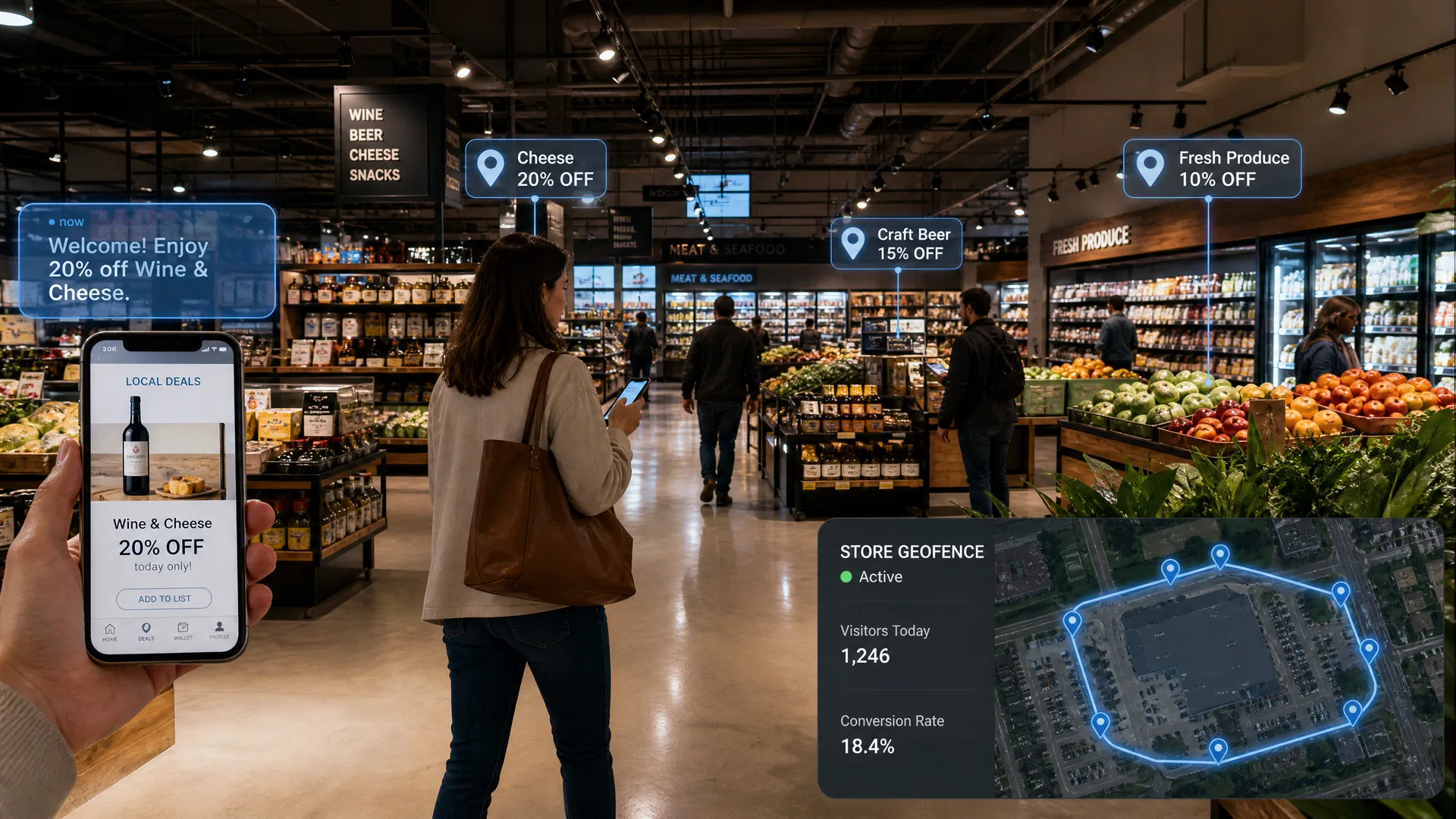
When agencies pitch geofencing to traditional advertisers, the conversation must center on closing this attribution gap. Unlike broadcast spots that fade into the ether, geofencing captures exact device interactions and measures physical consumer movement with absolute precision.
Translating Location Intelligence Into Broadcast-Friendly Metrics
To win over clients accustomed to legacy media, account executives must translate digital analytics into intuitive business outcomes. Instead of overwhelming clients with technical metrics like click-through rates and programmatic CPMs, focus on metrics that broadcast buyers respect: cost per verified store visit, total foot traffic lift, and incremental customer acquisition cost.
For instance, when executing competitor geofencing campaigns, agencies can report the exact number of consumers who visited a rival store after viewing the client's mobile ad and subsequently walked into the client's physical location. This direct comparison provides undeniable proof of market capture.
By framing digital performance in terms of store visits and cost per customer acquisition, agencies speak the native language of traditional media buyers, dissolving resistance and building instant credibility.
Combining Broadcast Reach With Geofencing Retargeting
Geofencing does not have to replace traditional media entirely; in fact, the most powerful agency strategies combine legacy reach with digital precision. Agencies can synchronize geofencing campaigns with billboard locations or TV broadcast schedules. For example, deploying event geofencing activations around a local festival while running local radio spots creates a powerful multi-touch ecosystem.
Furthermore, utilizing advanced foot traffic attribution reporting allows agencies to prove that the combined multichannel approach generated significantly higher store visitation lift than broadcast alone.
Furthermore, advertising agencies must evaluate how emerging mobile privacy frameworks impact long-term data collection, ensuring all campaign structures comply with regional regulations while maintaining high attribution accuracy across target audiences. Industry professionals continuously refine their targeting parameters to maximize foot traffic conversion and deliver measurable value to enterprise clients.
Furthermore, advertising agencies must evaluate how emerging mobile privacy frameworks impact long-term data collection, ensuring all campaign structures comply with regional regulations while maintaining high attribution accuracy across target audiences. Industry professionals continuously refine their targeting parameters to maximize foot traffic conversion and deliver measurable value to enterprise clients.
Furthermore, advertising agencies must evaluate how emerging mobile privacy frameworks impact long-term data collection, ensuring all campaign structures comply with regional regulations while maintaining high attribution accuracy across target audiences. Industry professionals continuously refine their targeting parameters to maximize foot traffic conversion and deliver measurable value to enterprise clients.
Furthermore, advertising agencies must evaluate how emerging mobile privacy frameworks impact long-term data collection, ensuring all campaign structures comply with regional regulations while maintaining high attribution accuracy across target audiences. Industry professionals continuously refine their targeting parameters to maximize foot traffic conversion and deliver measurable value to enterprise clients.
Furthermore, advertising agencies must evaluate how emerging mobile privacy frameworks impact long-term data collection, ensuring all campaign structures comply with regional regulations while maintaining high attribution accuracy across target audiences. Industry professionals continuously refine their targeting parameters to maximize foot traffic conversion and deliver measurable value to enterprise clients.
Furthermore, advertising agencies must evaluate how emerging mobile privacy frameworks impact long-term data collection, ensuring all campaign structures comply with regional regulations while maintaining high attribution accuracy across target audiences. Industry professionals continuously refine their targeting parameters to maximize foot traffic conversion and deliver measurable value to enterprise clients.
Furthermore, advertising agencies must evaluate how emerging mobile privacy frameworks impact long-term data collection, ensuring all campaign structures comply with regional regulations while maintaining high attribution accuracy across target audiences. Industry professionals continuously refine their targeting parameters to maximize foot traffic conversion and deliver measurable value to enterprise clients.
Furthermore, advertising agencies must evaluate how emerging mobile privacy frameworks impact long-term data collection, ensuring all campaign structures comply with regional regulations while maintaining high attribution accuracy across target audiences. Industry professionals continuously refine their targeting parameters to maximize foot traffic conversion and deliver measurable value to enterprise clients.
Related Industry Pages
Bridging Legacy and Digital for Long-Term Growth
Helping traditional broadcast advertisers embrace location intelligence is a transformative milestone for any advertising agency. By providing crystal-clear foot traffic attribution and bridging legacy media gaps, your agency establishes unbreakable trust with clients. To discover how Mediavision2020 helps agencies report verifiable ROI across all media channels, request a free agency geofencing strategy session with our team today.