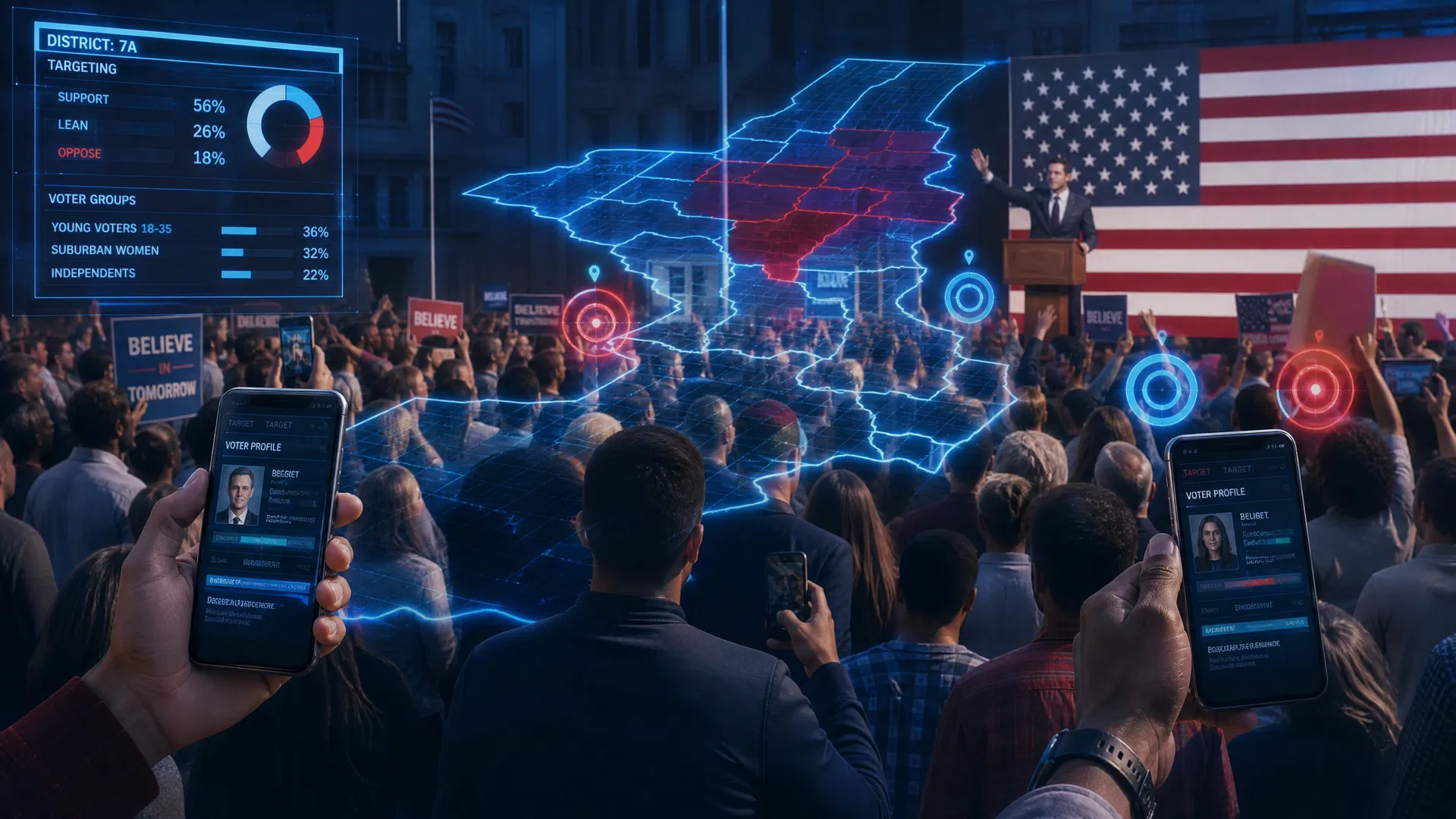
Political advertising has undergone a fundamental transformation over the past decade. The shift from broadcast TV to digital has accelerated dramatically, with political campaigns spending over $10 billion per election cycle on digital advertising. Yet despite this massive digital investment, most campaigns still rely on broad demographic targeting that cannot match the precision of geofencing — the ability to reach voters at the specific physical locations where political engagement is highest.
Political Geofencing Strategies
Polling Location Geofencing
Geofencing polling locations on Election Day captures voters who are actively participating in the democratic process. These voters can be messaged to encourage peer-to-peer outreach — sharing their 'I Voted' experience, encouraging friends and family to vote, and amplifying the campaign's Election Day messaging. Post-vote messaging (served after a device has been at the polling location for the minimum dwell time required to cast a ballot) is particularly effective for turnout amplification.
Opponent Rally and Event Geofencing
Voters who attend opponent rallies are engaged with the political process but not yet committed to your candidate. These persuadable voters — who have demonstrated political interest by attending a political event — are among the most valuable targeting audiences for persuasion campaigns. Geofencing opponent events and serving ads that highlight your candidate's contrast positions can move persuadable voters in competitive districts.
Voter Registration Event Geofencing
Newly registered voters are among the most persuadable audiences in any election. They have just made the decision to participate in the political process and are forming their political identities. Geofencing voter registration events and serving candidate introduction ads to newly registered voters — before they have been saturated with political messaging — captures this high-value audience at the optimal moment.
Precinct-Level Addressable Geofencing
Addressable geofencing allows campaigns to target specific households in key precincts — the digital equivalent of targeted direct mail, but with the engagement rates of digital advertising. By uploading voter file data (registered voter addresses) to an addressable geofencing platform, campaigns can serve ads to specific households based on voter registration status, party affiliation, voting history, and modeled persuadability scores.
Compliance and Legal Considerations
Political advertising is subject to federal and state campaign finance laws, including FEC disclosure requirements for federal campaigns and state-level disclosure requirements for state and local campaigns. Key compliance requirements for political geofencing include: required 'Paid for by' disclaimers on all ad creative, accurate representation of candidate positions, and compliance with applicable coordination rules.
Frequently Asked Questions
Can I geofence a polling location on Election Day? Yes. Geofencing polling locations is legal in all states. However, electioneering (distributing campaign materials within a specified distance of a polling place) is prohibited in most states. Geofencing ads served to devices near a polling location are delivered to the device's mobile screen — not distributed at the polling place — and do not constitute electioneering under most state laws.
Is geofencing effective for down-ballot races? Yes. Down-ballot races (state legislature, county commission, school board) benefit particularly from geofencing because they typically have smaller budgets that cannot support broadcast TV advertising. Geofencing allows down-ballot candidates to reach voters with precision targeting at a fraction of the cost of traditional media.