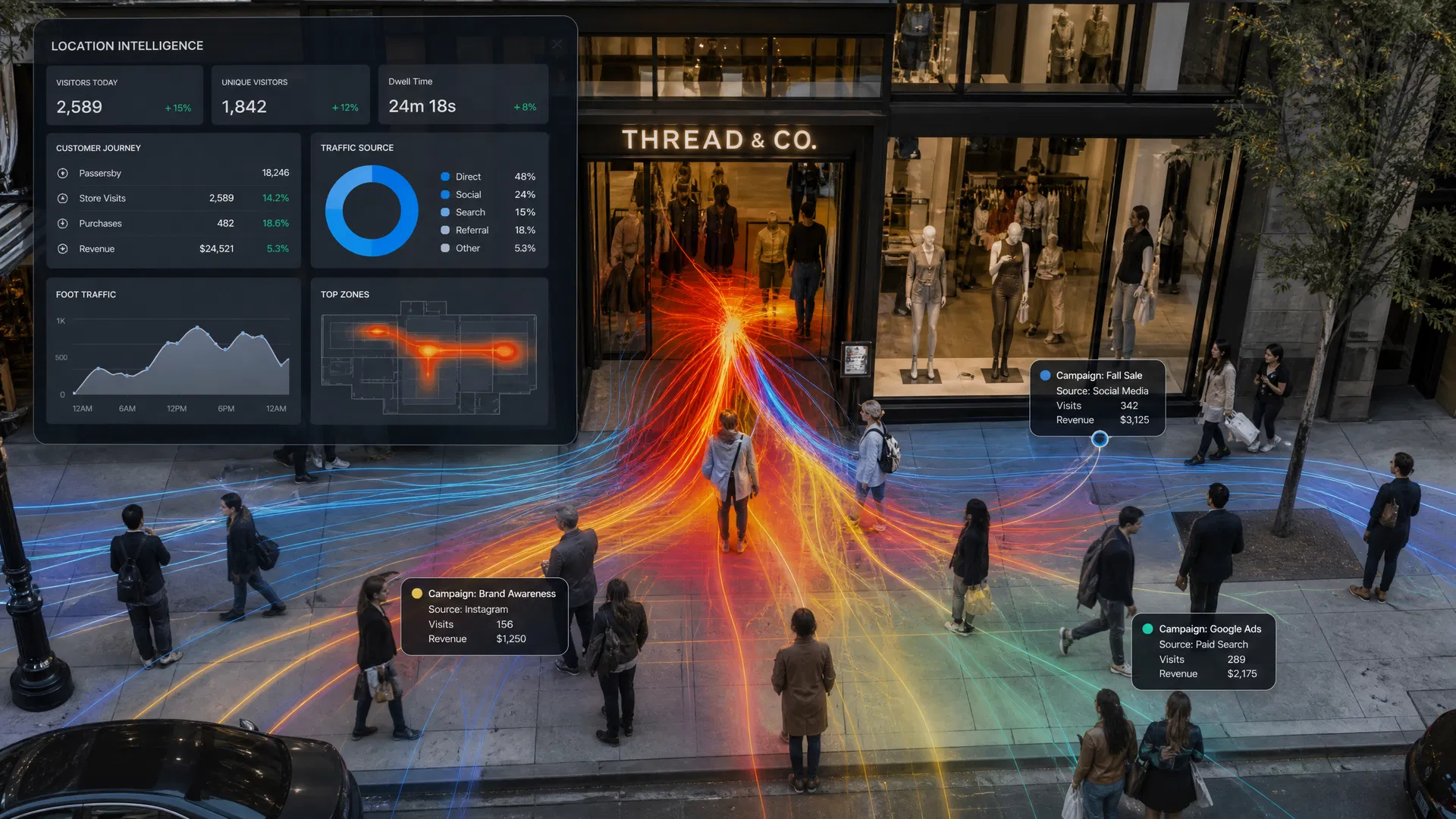

DEEP-DIVE: What Is a Conversion Zone? How Geofencing Measures Real-World Results
A conversion zone in geofencing is a precisely defined virtual boundary around a physical location where a desired customer action, or 'conversion', is intended to be measured. Unlike a geofence, which primarily focuses on targeting an audience within a specific geographic area, a conversion zone is designed to track the effectiveness of a geofencing campaign by monitoring visits or actions within a designated area. This allows businesses to quantify real-world engagement and attribute offline conversions directly to their digital advertising efforts.
Understanding the Difference: Geofence vs. Conversion Zone
While often used interchangeably, it's crucial for marketers to understand the distinct roles of a geofence and a conversion zone. A geofence is the initial boundary set up to deliver targeted ads to mobile users who enter, exit, or dwell within that area. Its purpose is to capture attention and drive interest. A conversion zone, on the other hand, is a separate, often smaller, geofence placed around a location where you want to measure a specific outcome. Think of it as the finish line for your geofencing campaign.
- Geofence: Triggers ad delivery to a defined audience.
- Conversion Zone: Measures physical visits or actions after ad exposure.
How Conversion Zones Work to Measure Real-World Results
The power of conversion zones lies in their ability to bridge the gap between digital advertising and real-world customer behavior. Here's a simplified breakdown of how it works:
- Ad Exposure: A potential customer enters a geofenced area (e.g., a competitor's store, a shopping mall) and is served an ad for your business.
- Customer Journey: The customer sees the ad and, influenced by it, decides to visit your physical location.
- Conversion Zone Entry: The customer enters the pre-defined conversion zone around your business. This entry is anonymously tracked.
- Attribution: The system attributes this physical visit as a conversion, directly linking it back to the initial ad exposure within the geofence.
This process provides invaluable data, allowing businesses to see which geofencing campaigns are successfully driving foot traffic and generating tangible results.
Real-World Examples of Conversion Zones in Action
Conversion zones are incredibly versatile and can be applied across various industries to measure diverse objectives:
- Retail: A clothing brand places a geofence around a competitor's store. When a customer exposed to their ad then visits their own store (the conversion zone), it's counted as a successful conversion.
- Restaurants: A new restaurant geofences a local business park. They measure conversions by tracking how many employees who saw their ad then visit their restaurant during lunch hours.
- Automotive Dealerships: A dealership geofences a car show. They track how many attendees who received their ad then visit their showroom in the following days.
- Event Promotion: An event organizer geofences a college campus. They measure conversions by tracking how many students who saw their ad then attend the event at the venue (the conversion zone).
These examples highlight how conversion zones provide clear, measurable insights into campaign performance, moving beyond clicks and impressions to actual physical engagement.
Campaign Implications and Strategic Advantages
Integrating conversion zones into your geofencing strategy offers several significant advantages for marketing managers and business owners:
- Quantifiable ROI: Directly measure the return on investment (ROI) of your geofencing campaigns by tracking actual store visits or other physical actions. This moves geofencing from a brand awareness tool to a direct response channel.
- Optimized Ad Spend: Identify which geofenced locations and ad creatives are most effective at driving conversions. This data allows for continuous optimization, ensuring your marketing budget is spent on strategies that yield the best results.
- Enhanced Audience Insights: Gain a deeper understanding of your target audience's offline behavior. By analyzing conversion data, you can refine your targeting, messaging, and even product offerings.
- Competitive Advantage: Outmaneuver competitors by understanding not just who you're reaching, but who you're converting. This allows for more agile and effective marketing adjustments.
Conversion zones transform geofencing from a theoretical concept into a powerful, data-driven marketing tool that delivers measurable business outcomes.
Contact our team at Mediavision2020 for a free consultation to learn how conversion zones can revolutionize your marketing strategy and help you measure real-world results. Visit our website at /request-quote to get started.