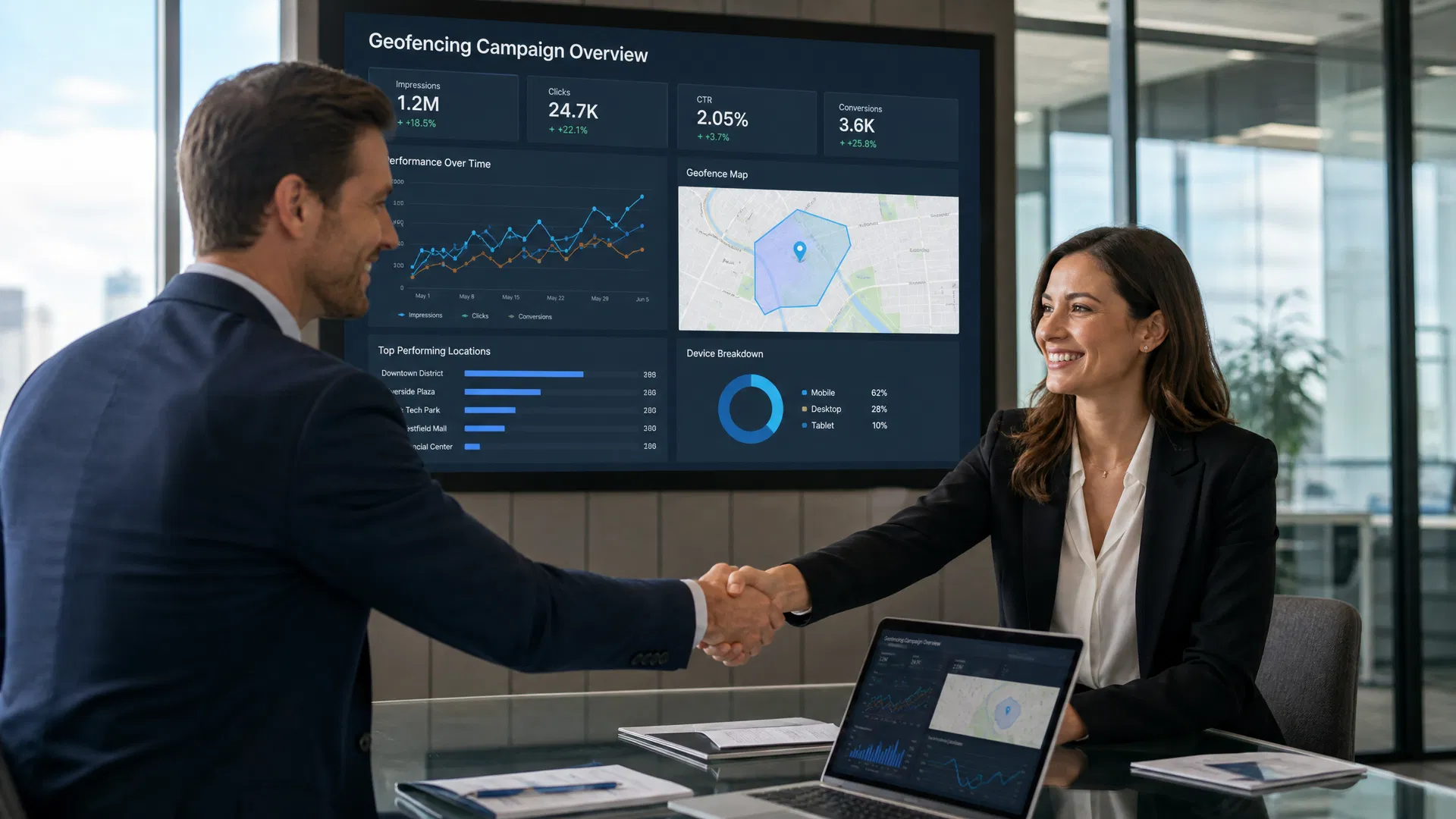

Creating and managing geofence campaigns requires expertise, precision, and daily optimization. With so many providers in the market, knowing what to look for can save you significant time, money, and frustration. Here are three criteria to help narrow your search.
1. Expertise and Strategy
Is geofencing a core competency of the company, or just one of many offerings? Where is the trading desk located — in other words, who is actually optimizing the campaign? Does the provider have an in-house team of analysts, or are they simply reselling another platform?
It's also important to consider the strategic layer. Are there digital strategists on hand to help clarify your expectations and build a campaign that will achieve your specific objectives? The best providers don't just run campaigns — they help you think through the strategy first.
2. Size and Shape of the Geofence
How granular can the geofence be? Some "geofencing" options offer targeting of one kilometer or more — that's not what you're looking for. On the other end of the spectrum, some providers can get as precise as a 25-foot radius, which is what's required to target a specific section of a large store or the footprint of a single building.
Also consider the shape of the geofence. The most common shape is a radius around a target location, but in metro areas or near major thoroughfares, a polygon shape can be far more effective — allowing you to closely trace the actual footprint of a location and avoid serving impressions to commuters passing by.
3. Publisher Reach
The final piece of criteria is publisher reach — how many apps and mobile websites can your ad run on? This is a critical factor in geofence campaigns because of the inherently limited number of ad impressions available within a small geographic area.
Unlike a campaign targeting a city or zip code, geofence campaigns target a small area, which means fewer people and fewer available impressions. Using a vendor with access to a large publisher network ensures your ad has a better chance of serving and penetrating these audiences effectively.
At Mediavision2020, we're passionate about geofencing — almost as passionate as we are about delivering great results for our clients. Reach out any time to learn more.